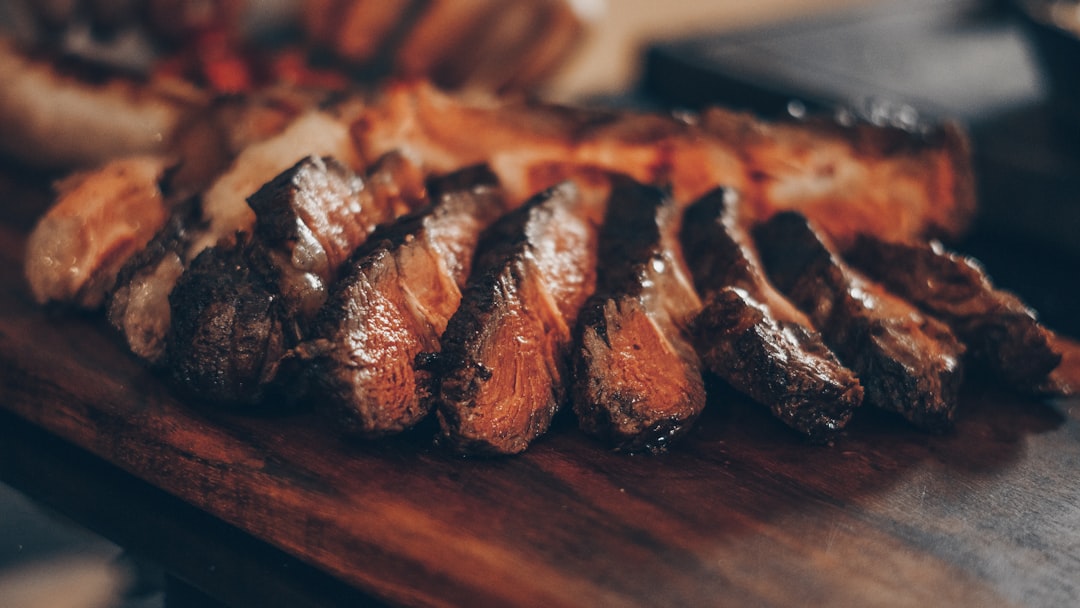
Brazil, the world's largest commercial cattle herd
Brazil holds the largest commercial cattle herd in the world, at roughly 230 million head. The leading beef exporter since 2004, it accounts for 20 to 25% of world exports. The dominant breed is the Nelore zebu (Bos indicus), well adapted to the tropical climate: hardy, parasite-resistant and efficient at converting feed on extensive tropical pasture.
The main producing states are Mato Grosso, Mato Grosso do Sul, Goiás and Pará. Export abattoirs are supervised by MAPA, the Brazilian agriculture ministry, and must additionally be approved by the importing country — a point to verify before contracting, since approval lists change and an unapproved plant means a rejected consignment. The global leaders JBS, Marfrig, Minerva Foods and Frigol operate their main sites in these states.
🐄 Nelore or Angus: what it means for the buyer
Nelore zebu yields lean, firm meat with long fibres, well suited to halal markets in Africa and the Middle East that favour slow-cooked cuts and grilling. Angus (Bos taurus), established in southern Brazil in Rio Grande do Sul, produces more marbled, more tender and fattier meat, sought after in premium European, American and Asian markets. Neither is better in the abstract — they answer different specifications, and buying the wrong one for your market is an expensive mistake.
The twelve cuts available
🥩 Hindquarter — 6 cuts
The hindquarter contains the prime cuts of the animal: topside, rump, silverside, thick flank, and eye of round. It is the most requested specification in commercial catering, food service and upmarket retail. Vacuum packed piece by piece, it allows final cutting to local standards.
🥩 Forequarter — 21 cuts
The forequarter delivers the braising and boiling cuts: short ribs, neck, chuck, shoulder and foreshank. Its 21 sub-cuts allow maximum value extraction from the carcass. Strong demand in African and Middle Eastern kitchens for tagines, stews and soups.
🦴 Whole carcass with bone
The bone-in carcass is the rawest export form. It lets the importer carry out the cutting to local standards, whether artisan butchers or importing abattoirs. Widely used in markets where local cutting is preferred, notably West Africa and parts of Asia.
🦴 Whole carcass in 22 parts
A carcass pre-cut into 22 parts is the compromise between the raw carcass and fine cuts. It simplifies logistics and distribution for importers with intermediate cutting capacity, and suits developing markets that want access to a broad assortment.
🥩 Whole carcass boneless
The fully boned carcass is the reference for food manufacturing and high-volume contract catering. It removes the constraint of bone-in cutting and simplifies industrial portioning. Vacuum packed in blocks of 20 to 30 kg, it is optimal for mincing plants, sausage production and prepared meals.
🥩 Eye round
Eye round is a lean, elongated hindquarter cut valued for its versatility: roasting, fondue, escalopes, carpaccio. Strong demand in the Middle East for shawarma and grilling. Its low fat content suits halal markets that are exacting about the cleanliness of the cut.
🥩 Flank steak
Flank is a long flat muscle with visible fibres and pronounced flavour. It performs well on the barbecue, over charcoal and in Tex-Mex cooking such as fajitas. Popular across the Americas and gaining renewed interest in African and Middle Eastern markets.
🥩 Knuckle
The knuckle is a lean, rounded hindquarter cut, portioned into steaks or cubes for skewers. Its firm texture and neutral taste make it a versatile reference for African and Asian markets, with excellent value against the prime cuts.
🥩 Ribeye
Brazilian ribeye is a premium, marbled and tender cut taken from the dorsal section between the sixth and twelfth ribs. From premium production in Rio Grande do Sul, Angus ribeye reaches marbling comparable to higher American grades. Sought after in fine dining, premium retail and for export to upmarket Middle Eastern markets.
🥩 T-bone
The T-bone carries both the striploin and the tenderloin, separated by the characteristic T-shaped bone. Its dramatic presentation makes it the signature of steakhouses and prestige barbecue. Strong demand in the Middle East, South Africa and higher-income Asian markets.
🥩 Tenderloin
The tenderloin is the most tender cut of the animal, almost free of connective tissue because the muscle does little work. It is served as tournedos, chateaubriand or roasted whole, and it is the most expensive reference in the range. Exported mainly to premium markets in the Middle East, North-East Asia and Europe.
🥩 Minced beef
Minced beef is supplied to specification on fat content and is destined for manufacturing, contract catering and quick service. Specify the fat percentage and the intended use at the point of enquiry: the requirement for a burger patty and for a bolognese base are not the same product.